
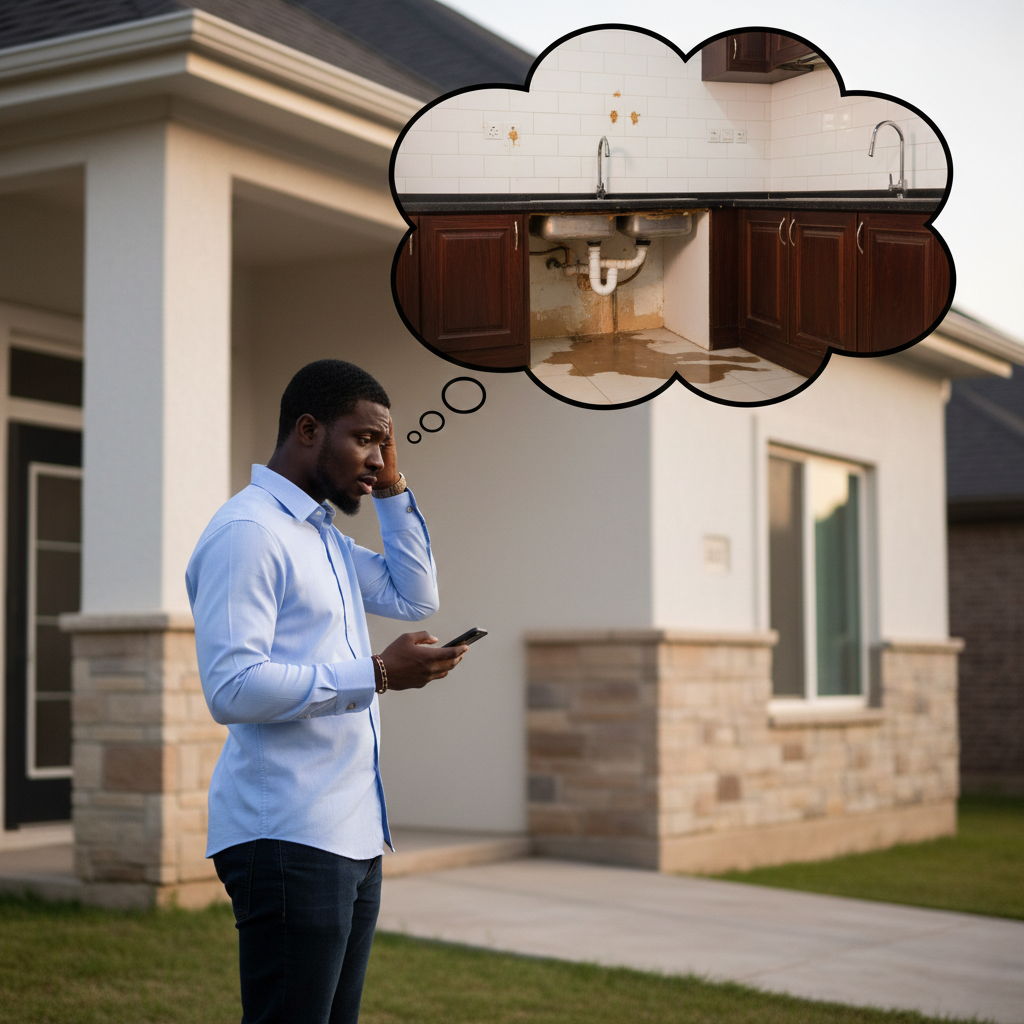
It started with a small water stain. Just a faint patch on the ceiling. Nothing urgent. Nothing alarming. The owner noticed it during a short visit and thought, “I’ll fix it properly next time.” Ife he only knew how expensive the cost of delayed maintenance can prove to be!

By the next visit, the ceiling board had softened. The paint had bubbled. The leak had spread behind the walls. What would have cost a modest repair months earlier now required ceiling replacement, rewiring, repainting, and days of labor.
This is how the cost of delayed maintenance quietly reveals itself. Not dramatically. Not overnight. But steadily.
RREAD MORE: What Happens to Most Nigerian Properties When Owners Travel Abroad
The Cost of Delayed Maintenance Is Rarely Immediate
One of the reasons delayed maintenance feels harmless is because consequences are not instant.
A dripping tap doesn’t flood the house in one day.
A minor roof crack doesn’t collapse the building in a week.
Peeling paint doesn’t destroy a wall immediately.
But over time, moisture spreads. Rust deepens. Electrical systems weaken. What began as a small, affordable fix slowly becomes structural damage. The cost of delayed maintenance grows in silence.
The Cost of Delayed Maintenance Multiplies Repair Expenses
In many Nigerian properties, small problems interact with climate and usage conditions.
Humidity worsens leaks.
Heavy rains exploit roof weaknesses.
Power fluctuations strain faulty wiring.

By postponing maintenance, owners often shift from:
- minor patchwork → to full replacement
- quick servicing → to system overhaul
- preventive checks → to emergency repairs
The financial difference can be significant.
The Cost of Delayed Maintenance Affects Property Value
Beyond repair bills, there’s another layer.
Properties that are not consistently maintained begin to look tired. Paint fades. Gates rust. Tiles loosen. Prospective tenants notice. Buyers notice.
Rental income becomes harder to secure. Resale value weakens. The cost of delayed maintenance is not only about fixing damage — it’s about lost opportunity.
Emotional Cost: Stress and Urgency
There is also a psychological side.
Emergency repairs create panic.
Urgent calls disrupt routines.
Unexpected expenses strain budgets.
Property ownership should feel stable. But when maintenance is delayed repeatedly, ownership begins to feel reactive instead of controlled. Many absentee property owners experience this cycle more often than they expect.
Preventive Maintenance Is Less Expensive Than Emergency Repair
There is a reason professional property maintenance exists as a structured system.
Routine inspections catch small issues early.
Scheduled servicing prevents deterioration.
Documentation ensures accountability.

When maintenance becomes consistent rather than occasional, properties age better — and owners experience fewer surprises. The cost of delayed maintenance is avoidable, but only when problems are addressed before they escalate.
A Familiar Pattern — and a Better Alternative
The owner with the ceiling stain eventually repaired everything.
But what frustrated him most was not the money spent. It was the realization that the entire situation could have been prevented with a simple, early response. Many property owners in Nigeria recognize this pattern.

The difference between stable property ownership and constant repair crises often comes down to timing. Small action today prevents major expense tomorrow.
IN OTHER NEWS: Digital innovation transforms property management in Nigeria’s real estate sector
A Thought Before You Postpone That Repair
If there’s something in your property that has needed attention for months — a leak, a crack, peeling paint, faulty wiring — consider what it might become if left unchecked.
The cost of delayed maintenance is rarely visible at first. But it is always accumulating.
EARLY ACTION PROTECTS YOU
If you own property in Nigeria — especially if you spend time away — consider putting a structured maintenance plan in place.
Proactive care protects your investment, preserves property value, and gives you peace of mind. Small attention today prevents large expenses tomorrow.